The rise of zero-proof drinks
Alcohol-free beer, wine and spirit alternatives are now on the menu. What zero-proof really means, how the drinks are made, and how to mix one.
- Sample article
By Eurobeverage Editorial4 min read
Not long ago, a guest who was not drinking alcohol could expect a glass of juice, a soft drink or a sugary "mocktail" as an afterthought. Today, many good bars list their zero-proof drinks with the same care as their cocktails, supermarkets have shelves of alcohol-free beer and wine, and a whole category of alcohol-free spirit alternatives has appeared. Zero-proof drinks have become a serious part of how people drink.
What "zero-proof" means
"Proof" is an old measure of alcoholic strength, so "zero-proof" simply means without alcohol. In practice you will meet several terms, and they do not all mean exactly the same thing:
- Zero-proof and non-alcoholic are everyday descriptions, most often used for mixed drinks.
- Alcohol-free usually means no alcohol at all, or only a trace. Definitions vary: under EU wine rules, wine and aromatised wine labelled "alcohol-free" may contain no more than 0.05% ABV, and UK government guidance uses the same 0.05% threshold for drinks in general.
- Dealcoholised describes a drink that was made with alcohol, which was then removed. Since a 2021 reform, EU wine law recognises dealcoholised wine, with no more than 0.5% ABV, and partially dealcoholised wine.
- Low alcohol covers drinks with some alcohol, but much less than usual.
In the EU, drinks stronger than 1.2% ABV must show their actual alcoholic strength on the label. If you avoid alcohol completely, for medical reasons, during pregnancy or for any other reason, check the label: some products described as non-alcoholic still contain up to 0.5% ABV.
Why people are choosing them
There is no single reason. Many people want to drink less, or not at all, some evenings. Some are driving, training, pregnant or taking medication. Others have simply stopped drinking. Campaigns such as Dry January, launched in 2013 and now run by the charity Alcohol Change UK, have made a month off alcohol familiar to many people, and the idea of being "sober curious", popularised by a 2018 book of that name, has given people a way to question their habits without committing to anything.
What has changed most is expectation. A zero-proof drink is no longer supposed to be a sweet consolation. It should be as considered as any other drink on the menu.
How alcohol-free beer is made
Beer was the first category to get alcohol-free versions right, and there are two main approaches.
- Limited fermentation. Brewers use special yeasts that ferment very little of the sugar, or stop fermentation early, so that little alcohol forms.
- Removing the alcohol. A full-strength beer is brewed, and the alcohol is then taken out, either by gentle vacuum distillation at low temperature or by filtering it through membranes.
Each method has its challenges, because alcohol carries aroma and body. Modern alcohol-free beers often use generous late hopping and carefully chosen malts to fill the gap, and many are now genuinely good.
Alcohol-free wine and spirit alternatives
Wine is harder. Removing alcohol takes away texture and warmth, and can leave a thin, sweet drink. Producers use vacuum distillation, spinning cone columns or membranes to remove alcohol while trying to keep the aromas, then balance the result with acidity, a little sweetness or sparkle. Sparkling styles are often the most convincing, because bubbles and acidity bring back some of the lift that alcohol provides.
Spirit alternatives are a different idea altogether. Most are not de-alcoholised spirits but new drinks: water distilled or infused with botanicals such as juniper, citrus, spices and roots, sometimes with a touch of chilli or ginger to recreate the warmth of alcohol. They are not meant to taste exactly like gin or rum, but to play a similar role in a mixed drink.
How to make a better zero-proof drink
The secret of a good zero-proof drink is the same as for any cocktail: balance. Without alcohol, you need to build structure in other ways.
- Acidity. Fresh citrus, verjus or a shrub, a syrup preserved with vinegar, gives a drink brightness.
- Bitterness. Tea, tonic water, grapefruit peel or alcohol-free bitter aperitifs add the backbone that stops a drink tasting like juice.
- Texture. A little honey or rich syrup, or a shaken foam, gives weight in the mouth.
- Aroma. Herbs, citrus peel and spices matter more than ever when there is no alcohol to carry them.
- Dilution and temperature. Serve zero-proof drinks very cold, with good ice, and taste as you go.
Be careful with fermented ingredients: kombucha and similar drinks can contain small amounts of alcohol.
Many classic cocktails adapt well. The mojito is one of the easiest: keep the lime, mint and sugar, leave out the rum, and lengthen it with soda water and a splash of cloudy apple juice or a good tonic. Here is the original to start from:
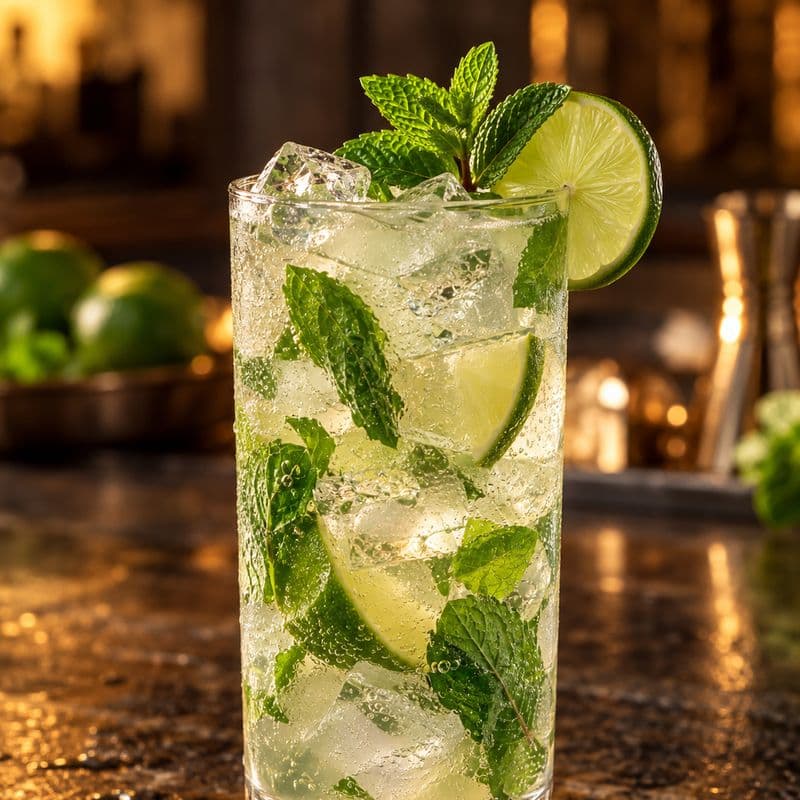
Rum
Mojito
Fresh mint, lime and white rum become a long, sparkling drink topped with soda.
- Difficulty
- Easy
- Time
- 6 min
A category with a future
The rise of zero-proof drinks does not mean the end of wine, beer or spirits. It means more choice, and a welcome for everyone at the table, whatever is in their glass. Explore our cocktail recipes for ideas you can adapt, and find everything we publish about zero-proof drinks.
Topics
- zero-proof
- alcohol-free
- non-alcoholic
- mocktails
- low and no